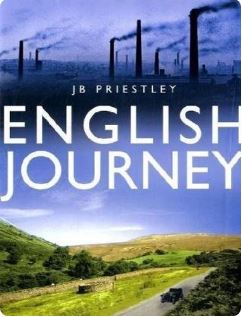
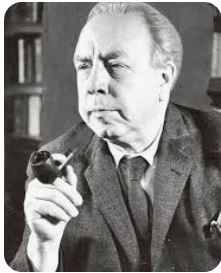
"English Journey" by JB Priestly.
Steve chose this one following Bradford – City of Culture 2025, and read it alongside John Bixendale’s “Priestley’s England”, and noted that London hardly gets a mention.
Bradford was Priestley’s birthplace.
This 480 page book starts at p23 by describing a visit to Southampton, and goes on to visits to many major areas and cities such as Bristol and Nottingham.
Hull makes a cameo appearance.
Priestley observes the social conditions of a nation at work and at play in the depression that followed World War 1,
and the book has similarities to
William Cobbets’s “Rural Rides”
written in the early 19th century after the Napoleonic wars.
It's a book of its time, 1933, Priestley was 39, at the height of his powers.
The scars of war are healing over, the motor car is growing in significance.
But there is no mention of the great depression and no mention of the election of Hitler.
In that setting he visited the various towns and cities and viewed people “through the lens of his eye”,
and whilst that eye saw the social deprivation of slums and factory workers in the wake of the industrial revolution,
it rolled past the situation in the rural areas and ignored the influence of London and the wider world.
The role of latter-day robber barons is described, but the book is flat, there is little drama, no character development, just opinion.
Whilst Priestley had some confused views on economics he clearly enjoyed the “people watching” aspect of the journey.
Various detailed comments from club members were noted including:
Positively:
- I'm really enjoying the engaging mixture of description and social commentary, and the intriguing arguments - for instance, for and against the Cadbury villages.
Very provocative! Interesting that the idea was rejected by the Australians: money over paternalism.
- And so lovely to read about our area - well, near enough! I can hear my grandad speaking!!
- It was a genial ramble even if his observations of cathedrals left much to be desired.
- Well written, good use of language even if a bit lengthy.
- Humane attitude but rude sometimes.
- Good descriptions but all a bit “samey”, streets of mean, dirty little houses, blackened factories etc
- Identifies social problems
Negatively:
- More of a slog than a good read.
- Although I always enjoy a travelogue I found the reportage style of writing heavy going.
- He was pretty uncomplimentary about the external appearances of the people at the whist drive and at other places, although he did recognise their inner warmth and kindness.
- His view of the “North” was a bit jaundiced.
- Bitterly disappointed in the book.
- He was “an incorrigible snob, sneering at the North”, - Eric Blair (a.k.a George Orwell).
- Pompous hypocrite. Left West Yorkshire to live in London.
- His “civilisation” was very narrow (Theatre, Classical Music), no mention of folk art, (Trades Union Banners, JS Lowry, etc), no folk music nor dancing (Morris, Clog, Sword) all spring from working people.
Interestingly:
- It was a bit demanding when I first started it - the complex language: have to keep my dictionary handy for words like sybaritic and teleological
- What I don't understand is why he took a short but complicated trail journey from Hull to Lincoln when he could have taken the Humber ferry.
- Reading a book written in 1933 and knowing what horrors were approaching made it very poignant.
- Five different members had brought their copy of English Journey, they were all in different formats, and one even had illustrations.
Doorly score: 3.4
PC. March 2026
|